FOCUSING
An Embodied, Relational Practice for Our Times
What is Focusing?
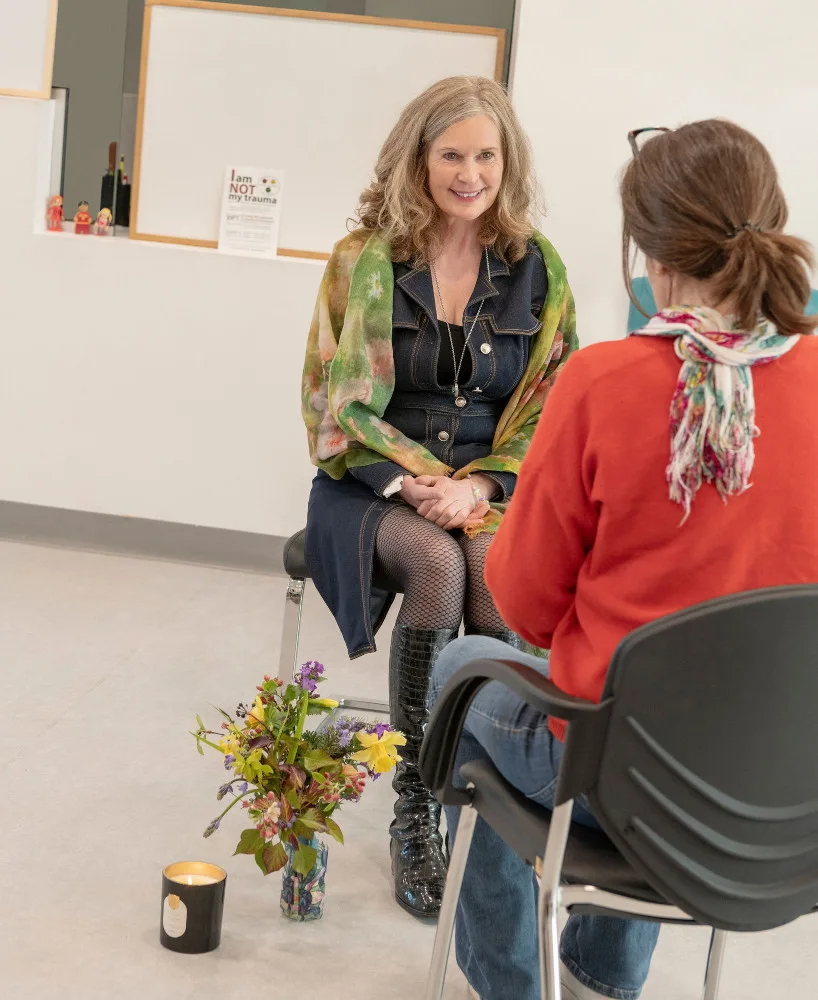
Focusing is a practice that helps us recognise our own inner signals in real time through slowing down and giving space to what arises from within so that our ‘felt sense’ can unfold naturally and bring fresh insights, relief and direction.
Rooted in neuroscience, lived experience, and gentle attention, Focusing supports regulation, integration, and deep listening — solo, in nature, or with a Focusing companion.
You do not need to analyse, relive, or force anything. In Focusing We meet our experience exactly as it is, allowing change to arise organically, by simply following the experience with curiosity.
Why Learn Focusing and Why Now?
Focusing is both a life skill and a professional skill. People learn Focusing because it:
- Builds deep self-trust, aligned clarity and emergent forward steps in stuckness and decisions.
- Supports emotional regulation and nervous system resilience while building new safety pathways.
- Helps resolve long-standing patterns gently and safely
- Strengthens embodied presence, slowing down and listening
- Enhances therapeutic, coaching, facilitation, and caregiving work
- Encourages meaningful, sustainable change rather than quick fixes
Areas of Application
Self-Regulation
By paying gentle attention to our bodily sensations and our ‘felt sense’, we create a peaceful and non-judgmental inner space that allows us to disidentify from stuck parts and hold them with compassion.
Therapy
Focusing enables practitioners to offer a secure relational base that supports clients moving from survival into regulation and integration. They can help the client pause, inquire into their bodily sensations while allowing images or words to naturally arise.
Parenting & Education
Focusing teaches us empathic listening. We learn to not just hear a child’s words but sense the emotional truth behind them. Children can learn focusing techniques to pause and identify how something feels in their body.
Professional & Organisational Settings
Even in fields such as financial planning or leadership, Focusing helps reduce fear-based reactions and re‑engage clarity and wise decision‑making. It helps with resolving team conflicts, fostering understanding and developing innovative ideas.
How I Practice and Teach Focusing
My approach to Focusing is:
- trauma aware and respectful
- grounded in embodiment rather than performance
- oriented toward safety, consent and choice
- suitable for beginners and experienced practitioners alike
You will be guided to develop both self‑Focusing and Focusing partnership skills, so the practice becomes something you can rely on in your personal life, in your interaction with others and your professional context.
I’ve started focusing with Deirdre in January. It’s has changed the way I respond to my body and my emotions . It’s about holding all my parts . When I am focusing “part of me is…..“ it’s not the whole of me.
Its very gentle way to spend time following my body with out get consumed by my emotions. Also the schools where my children go have commented on how much more regulated they are. I don’t need any more proof focusing is changing my family life for better.
- Annemarie
Focusing Learning Programmes
Introductory Workshops
A gentle entry point into Focusing — no prior experience required. Learn how attention, presence, and the felt sense support regulation and clarity.
Focusing Skills Training
Professional & CPD Training